
Wasp nests found and treated around Motueka
Wasps going in and out of a bank, a gap under the eaves or the hedge by the clothesline. Richard tracks them back to the nest, treats it, and goes over the rest of the property for any you haven’t found.
If Richard’s on a job when you ring, your call is still answered and he calls you back.
“… Found more wasp nests than we had identified. He went the extra mile …”
- Treats
- Rats and mice, wasps, borer, ants, spiders, flies, cockroaches and fleas
- Where
- Motueka, Riwaka, the Moutere, Māpua and Ruby Bay
- Experience
- More than 15 years in the trade
- Quotes
- Free inspection and quote
- You call or send the formA photo of what you’re seeing helps
- Richard rings youTo go over it and book a time
- Free inspection and quoteAt your place, before any work starts
- Treatment, then a check-inHe makes sure it’s worked
Before you ring
What sets the price?
Where the nest is, how high and how hard it is to reach, how many nests turn up, and the size of the block. Inspecting and quoting are free.
Is it safe to wait?
A nest keeps growing all summer and is busiest in late summer and autumn, so one found early has fewer wasps in it. Keep children and pets clear of the entry meanwhile.
What does the visit involve?
Richard finds the nest from the flight path, treats it where it is, then goes over the rest of the property for others.
What’s about this month?
This month is lit on the strip. Where a pest keeps a season, its band shows the months it’s most about.
This monthBusiestIn season
Tell Richard what you’re seeingWasps
In season September to May; busiest February to May.
Queens start new nests in spring. Nests grow all summer and are busiest in late summer and autumn, raising next year’s queens.
Wasp country
The beech forests at the top of the South Island carry the highest densities of wasps in the world: on average 12 nests a hectare, and 50 to 60 at the record. Abel Tasman and Kahurangi national parks are both close by, and multiple stings are a real risk for people walking there.
Around the house, a queen picks a warm, dark, dry spot to start her nest: often a bank with a sunny aspect, but just as often the roof space, the eaves or a wall. One nest can turn out 11,000 to 13,000 workers in a season.
How Richard treats a nest
Find the nest
Richard follows the flight path back to the way in: a hole in a bank, a gap under the eaves, a crack in the cladding or a spot in the hedge.
Treat it where it is
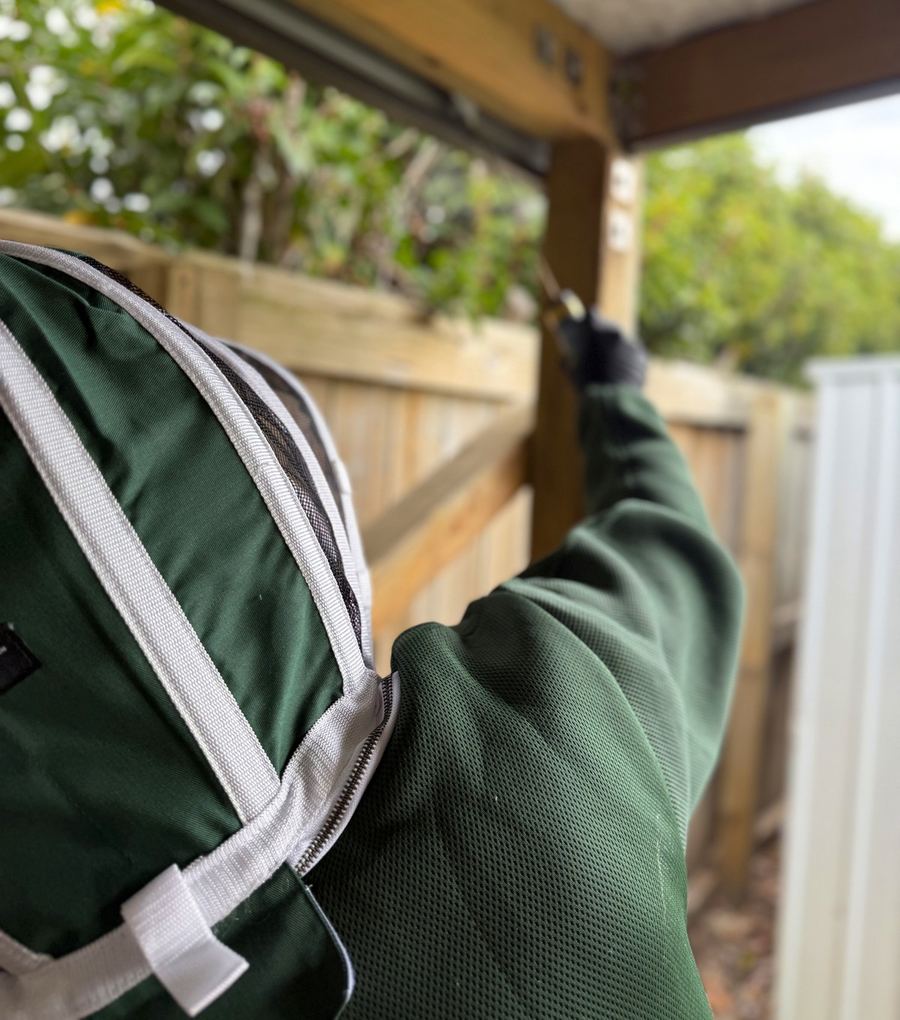
Suited up, he treats the nest at its source: in the ground, the wall, the roof space or the tree.
Check the rest of the place
Then he goes over the rest of the property. Where there’s one nest there’s often another, and customers have had him find nests they never knew were there.
Great service from Richard. Quick to reply to my messages, and he listened to my concerns. Booking was made, no long wait. No rush visit as he was very thorough. Would I recommend, yes definitely.
A big nest is bigger than it looks
A nest in a wall, a roof or a bank is bigger than the hole suggests. Most are about the size of a soccer ball, and about 10% of German wasp nests survive the winter and grow to an enormous size by their second autumn. Richard has the suit and the gear to treat them where they are.
Orchards, sheds and shelterbelts
On orchards and lifestyle blocks, Richard checks the shelterbelts, banks, hedges and sheds as well as the house. Workers feed within a few hundred metres of the nest and sometimes up to a kilometre, so the nest sending wasps to your fruit can be some way off.
A nest in a shelterbelt or a bank by the packing shed is a sting risk for everyone working the block at picking time, so it pays to have it found and treated early.
Which wasp is it?
German wasps reached New Zealand in the 1940s and common wasps in the late 1970s, and both nest in banks, roofs and walls. German wasp nests are grey and common wasp nests are brown.
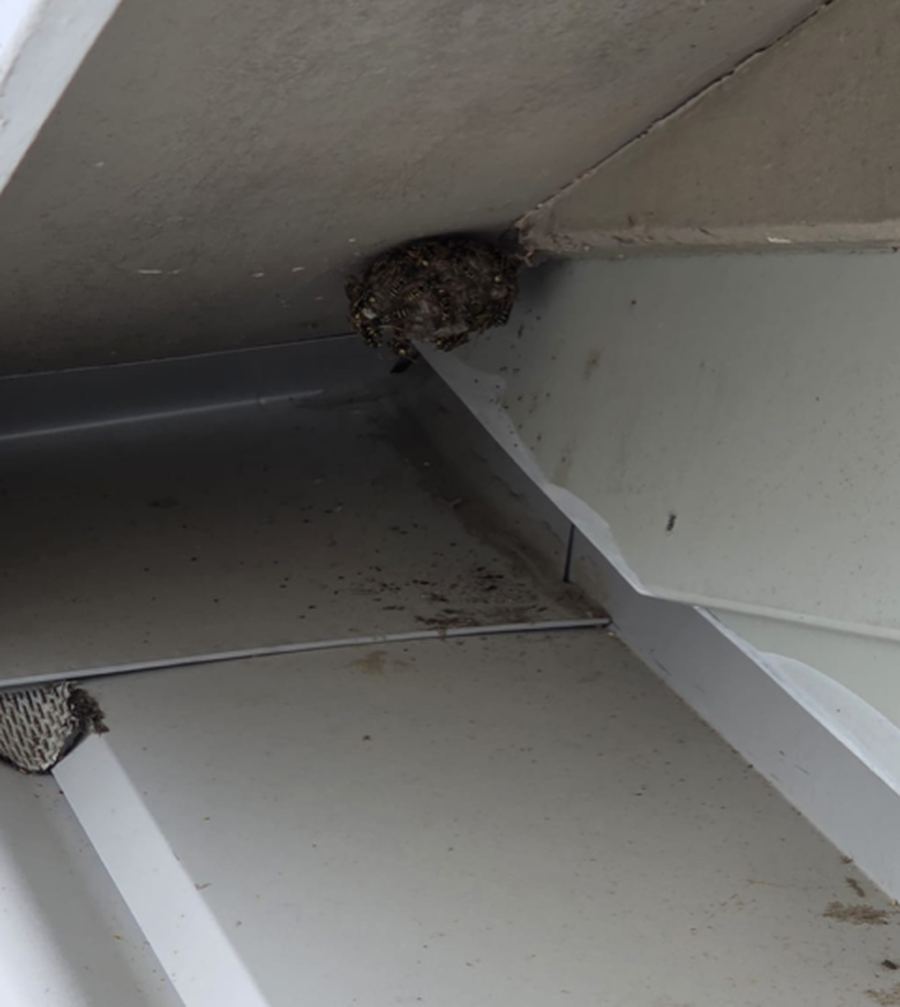
The Asian paper wasp has reached the top of the South Island too. Paper wasps build small, open nests about the size of a pear. Richard treats all three.
Before Richard comes out
- Watch from a safe distance where the wasps fly in and out, and at what time of day
- Keep children and pets away from the entry
- Leave the hole alone: don’t block it or spray it before Richard has seen it
- Tell us how high it is, and whether it’s in the ground, a wall, the roof or a tree
What sets the price
- Where the nest is: a bank at ground level, a hedge, or a wall cavity or roof space
- Height and access, such as ladder work at the eaves or the gutter line
- How many nests turn up when Richard checks the property
- The size of the block: a town section, or an orchard with shelterbelts and sheds
Perfect job, friendly fella.
Questions
Another question? Call 0800 166 027 or send it with your quote.
Grey nest or brown nest: does it matter?
German wasp nests are grey and common wasp nests are brown. Richard treats both.
Can you treat a nest inside a wall or the roof?
Yes. Richard treats nests in roof spaces, eaves and wall cavities as well as in banks, hedges and trees.
When are wasps at their worst?
Late summer and autumn, when each nest is at its biggest and raising new queens. Queens start nests in spring, so a nest found early is a smaller one.
Do you treat nests on orchards and lifestyle blocks?
Yes. Richard checks the shelterbelts, banks, hedges and sheds as well as the house, and treats every nest he finds.
Get a free quote for your wasp nest
Tell Richard what you’re seeing and where. Photos help.
What to send Richard
- A photo, if you can get one: droppings, a nest, holes in timber or an ant trail
- Where they are: inside, up in the ceiling, under the floorboards, in the shed or out in the orchard
- When you first noticed them
- Who’s home, or when the bach is empty
- For borer, the year the house went up, if you know it
Richard gets back to you to go over it, then visits to inspect and quote, free of charge.
Thanks, we’ve got your details.
Richard will get back to you to go over it and book a visit.